

Wind: friend and foe
Setting on a hillside in Palo Pinto County last week on the Dale River Ranch, I overlooked a little valley that led down to a creek that joined the Brazos a half mile or so to the north.
My goal was to use my trusty old box call to entice a gobbler out of the heavy cover. On my way driving into the ranch, I stopped at a low-water crossing to change into my camo. When I shut the truck door, I heard several gobblers sounding off close by. The birds were sticking in tight cover and I wondered why. Normally, early in breeding season they strut around and gobble in relatively open country, hoping to attract a hen. Had they just come off the roost? Probably not; there were no big roost trees nearby, just a lot of thick junipers and low-growing brush common to the area.
Hunting gives one a good bit of time to reflect and ponder things. Setting on that hillside I found myself wondering just why the birds were not responding to my plaintive hen yelps. The wind was blowing a steady 20 knots with gusts somewhat higher every few minutes. I began thinking about just how much the wind influences hunting and fishing. Wind might be the single most influential factor when it comes to pattering fish and wildlife.
We watch the wind closely when hunting, always setting up downwind of where we expect game to appear. Once big game animals get a whiff of human they disappear quickly. Here’s a case in point: My buddy Randy Douglas informed me of a feeder that hogs frequented on a daily basis, usually showing up during the last few minutes of shooting light. I was hunting with my .45-caliber Texan big bore air rifle and wanted the shot to be within 60 yards. My goal was to drop the hog in its tracks. I didn’t wish to do a lot of tracking in the dark, especially after a full day of turkey hunting. The wind was still howling, but I guessed it would not interfere with a feeding pattern the hogs had been using for the past several days. I set my hunting chair up in the edge of a thick cedar tree about 50 yards from the feeder. Sure enough, during the fading light I harvested a fat eater sow. Had I not played the wind, my scent could easily have spooked the sounder of hogs.
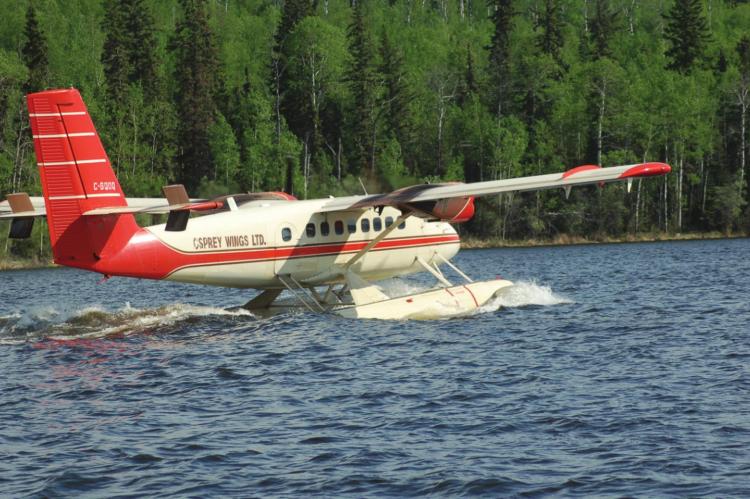
Fishermen are equally influenced by the wind. I remember watching a veteran bush pilot pull his floatplane up to a dock during a gale a couple years ago up in northern Saskatchewan. This was the most amazing display of piloting and sailing skills I had ever witnessed. Several of us were at the dock, waiting on the plane to carry us back to civilization. The pilot landed his float plane out in open water, downwind of the dock and used the engine/wind to expertly maneuver his plane precisely up to the dock where it was quickly secured with ropes.
We fishermen should pay close attention to the wind when casting for bass or striper, especially when using level wind reels. Even with today’s state-of-the-art reels it’s next to impossible to cast very far into the wind without the dreaded backlash. Did you ever try to use a fly rod to cast into the wind? This is a feat that is best left to far more skillful anglers that I.
Wind speed and direction also affects where we fish. During the winter, after freezing weather causes a major shad kill, the dead baitfish are often blown up in huge numbers in the shallows just out from shore. Hordes of catfish move in for the easy pickings. Striper and white bass anglers often fish the windy side of major lake points during the morning hours because shad move shallow in these areas during the evening to feed on zooplankton. The game fish are there for easy pickings.
Yep, if we hunt or fish, the wind definitely is a natural phenomenon that we must learn to deal with. It’s just another piece of the intriguing outdoor puzzle that keeps our skill level whetted, whether we realize it or not.
Email outdoors writer Luke Clayton through his website www.catfishradio.org.